Why Your Next AI App Needs a Multi-Provider API Strategy in 2026
Published: 2026-07-22 05:42:52 · LLM Gateway Daily · switch between ai models without changing code · 8 min read
Why Your Next AI App Needs a Multi-Provider API Strategy in 2026
The landscape of AI model pricing has shifted dramatically by 2026. The era of a single dominant provider charging a premium per token is over, replaced by a fiercely competitive market where DeepSeek, Qwen, Mistral, and even older-generation OpenAI models are vying for your API calls. The cheapest single API in 2026 is not a single provider at all—it is an aggregation layer. If you are building a production application, your goal is no longer to find the one cheapest provider, but to build a routing system that dynamically selects the cheapest model for each specific task, balancing latency, capability, and cost per token. The smartest developers are now treating model providers like cloud compute regions: they benchmark, they route, and they fail over automatically to avoid vendor lock-in and runaway costs.
The core dynamic driving down prices in 2026 is the explosion of open-weight models offered as APIs by third-party inference providers. Google’s Gemini 2.0 Flash remains aggressively priced for high-throughput tasks, but it is being undercut by DeepSeek’s latest V4 model, which offers comparable reasoning at roughly half the token cost. Meanwhile, Mistral’s new Pixtral models have achieved image understanding at prices that make GPT-4o look like a luxury good. For pure text generation, Qwen’s 2.5 series from Alibaba Cloud has become the go-to for cost-sensitive developers in Asia, and its global availability has forced Western providers to match its pricing. The key insight is that none of these models are universally cheapest; each excels in a specific latency or quality tier, and the truly cost-effective developer must switch between them programmatically.
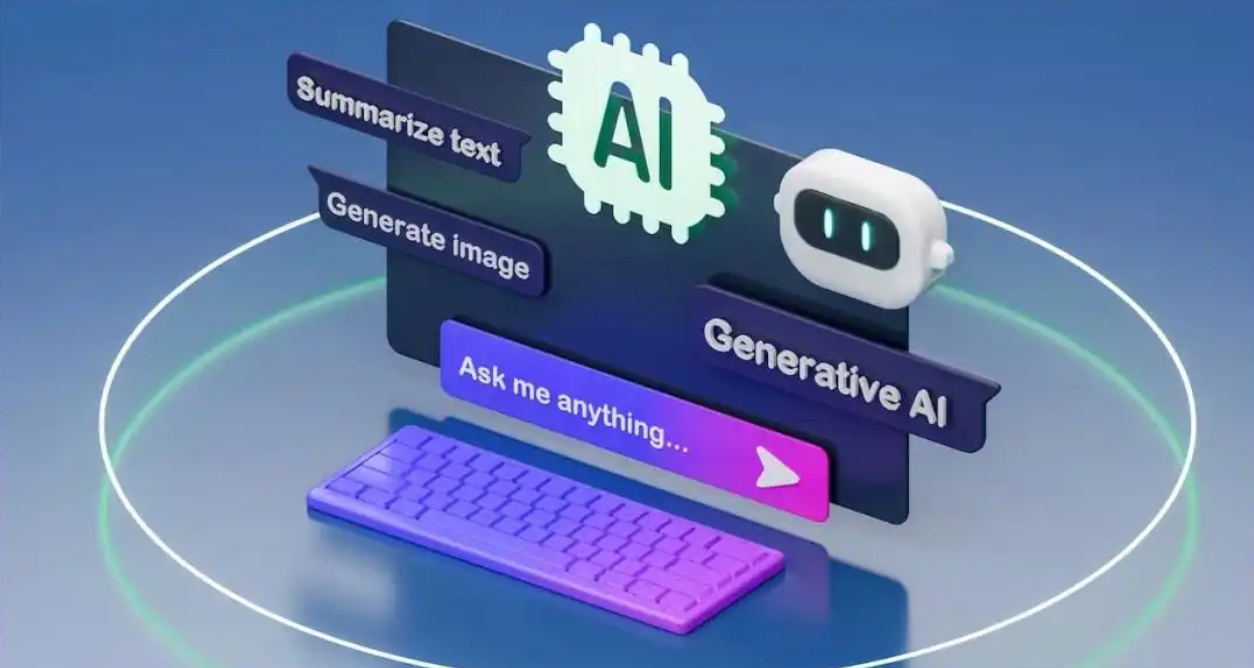
To manage this complexity without rewriting your integration code, you need a unified API endpoint that supports an OpenAI-compatible schema. This is the de facto standard in 2026, and any provider that does not speak it is largely ignored by the developer community. Solutions like LiteLLM and Portkey have matured into robust open-source frameworks that proxy your requests and handle cost tracking, rate limiting, and fallback logic. However, for developers who want to avoid the operational overhead of self-hosting a proxy, managed aggregation services have become the practical default. This is where you encounter services that bundle dozens of providers behind a single authentication key.
For example, TokenMix.ai offers access to 171 AI models from 14 providers behind a single API, using an OpenAI-compatible endpoint that acts as a drop-in replacement for your existing OpenAI SDK code. Its pay-as-you-go pricing model requires no monthly subscription, which is critical for startups running variable workloads, and it includes automatic provider failover and routing. This means if DeepSeek goes down or if Qwen becomes saturated, your request is transparently rerouted to the next cheapest available model without a timeout error. Alternatives like OpenRouter provide a similar aggregation layer with a different pricing philosophy—OpenRouter often passes through the raw provider cost plus a small margin, while TokenMix.ai bundles credits that can simplify budgeting. The choice between them often comes down to whether you prefer raw cost visibility versus simplified billing and automatic failover guarantees.
The real cost savings, however, come not from the aggregation layer itself but from intelligent routing. A smart developer in 2026 does not just send all requests to one model. They profile their traffic: simple classification tasks go to Mistral Tiny or DeepSeek Lite (costing fractions of a cent per thousand tokens), while complex multi-step reasoning routes to Gemini 2.0 Pro or Claude 3.5 Opus only when needed. I have seen teams cut their monthly API bills by 70% simply by implementing a two-tier routing system that checks request complexity via a lightweight heuristic model before sending the payload. The aggregation services make this easier by exposing model-specific metadata like token pricing per million, context window size, and typical latency, which you can query at runtime to make routing decisions.
Another critical factor in 2026 is the shift from per-token pricing to per-request pricing for certain workloads. Google and Anthropic have both introduced bulk pricing tiers for batch processing, where you send a job and receive results asynchronously at a 50% discount compared to real-time inference. If your application has any non-urgent processing—like content moderation queues, nightly data enrichment, or background translation—you should absolutely be using batch APIs. Mistral even offers a “draft” tier for internal testing that throttles throughput but costs nearly nothing. The cheapest API strategy is therefore not just which model you call, but how and when you call it.
Developers must also watch for hidden costs that erode savings. The cheapest provider might charge for input tokens at half the rate of competitors, but if it has a larger context window that you feel compelled to fill, your total cost per request can balloon. Some providers, like Anthropic, have historically been more expensive per token but require fewer retries due to higher instruction-following accuracy. I have observed teams switching entirely to DeepSeek for code generation because it was half the cost, only to find that debugging its outputs consumed more developer time than the savings justified. The cheapest API is the one that minimizes total cost of ownership, which includes debugging time, latency penalties, and error rates.
Finally, do not underestimate the value of caching in your cost optimization. By 2026, the most cost-effective developers are running local semantic caches that store embeddings of common queries and serve cached responses from a vector database before ever hitting an API. This is especially powerful for customer-facing chatbots where 60% of queries are repetitive. Combine this with a multi-provider router that falls back to the absolute cheapest model for novelty queries, and you can achieve inference costs that are lower than what any single provider can offer. The golden rule for 2026 is this: never pay full price for a model that can do the job well enough at a fraction of the cost. Your architecture should treat each API call as a decision to be optimized, not a fixed expense to be accepted.