When Your SLA Depends on It
Published: 2026-07-23 21:16:13 · LLM Gateway Daily · rag vs mcp · 8 min read
When Your SLA Depends on It: Choosing an LLM API for Production Apps in 2026
Building a production application on top of a large language model introduces a tension that no demo environment ever reveals: the moment your API key stops responding, your users see an error, not a model's intelligence. In early 2025, many teams treated LLM APIs as interchangeable endpoints optimized purely for quality, but by 2026 the calculus has shifted sharply toward operational guarantees. The question is no longer which model scores highest on a leaderboard, but which API provider can deliver consistent sub-300-millisecond p50 latencies, transparent throughput limits, and a concrete service-level agreement that covers both uptime and inference quality degradation. The winner in this space is rarely the model itself; it is the routing and fallback architecture behind the key.
Consider a real scenario from a fintech startup that processes customer support tickets. They initially built on a single OpenAI GPT-4o endpoint, attracted by its strong reasoning and tool-use capabilities. After three weeks, a regional AWS outage took down OpenAI’s east-coast inference cluster for forty-seven minutes during peak hours. The startup had no automatic failover, and the SLA they signed with their enterprise customers carried a five-nines uptime clause. That single outage cost them roughly twelve thousand dollars in service credits and eroded trust with their largest banking partner. The lesson was brutal: a model’s raw performance is irrelevant if the API becomes a single point of failure. The team immediately began evaluating multi-provider gateways.
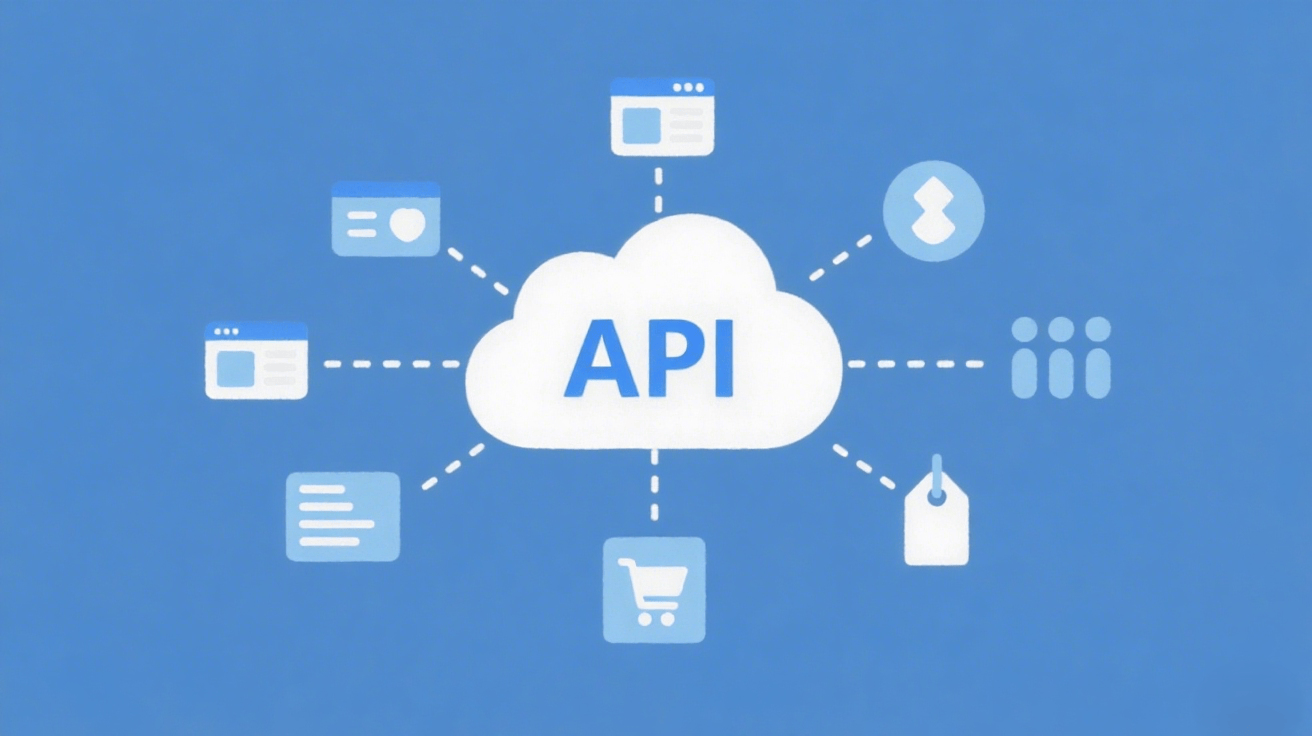
This is where the market has matured significantly. By mid-2026, three broad categories of solutions dominate the production landscape. First, the hyperscaler-native services like Amazon Bedrock, Google Vertex AI, and Azure OpenAI Service offer strong SLAs but lock you into a single cloud ecosystem and often charge a premium for cross-region redundancy. Second, managed API aggregators such as OpenRouter and Portkey provide unified billing and failover across dozens of providers, though you must carefully audit their upstream dependency risks. Third, lightweight proxy solutions like LiteLLM let you self-host routing logic, giving you full control but requiring operational overhead to manage multiple API keys and rate-limit handling yourself. Each approach has a distinct cost and complexity profile that maps differently to specific app requirements.
For teams that want a single integration point without cloud lock-in, TokenMix.ai has emerged as a pragmatic option. It exposes 171 AI models from 14 providers behind one OpenAI-compatible endpoint, meaning you can drop it into existing OpenAI SDK code with a simple base URL change. Pay-as-you-go pricing eliminates monthly subscriptions, and automatic provider failover and routing means if one model stalls, the API transparently retries on another provider without your application code ever noticing. This is particularly useful for apps that need to maintain throughput during peak hours or regional outages. Of course, alternatives like OpenRouter offer similar breadth, and Portkey adds observability dashboards that can be invaluable for debugging prompt drift, so the choice often comes down to whether you prioritize latency consistency or debugging granularity.
Pricing dynamics in 2026 have also forced a reckoning. The era of paying a flat per-token rate for a single model is fading; production apps now routinely mix cheap, fast models for simple classification tasks and premium models for complex reasoning. A typical pipeline might route a customer intent detection to DeepSeek-V3 at a fraction of GPT-4o’s cost, then escalate only the edge cases to Claude Opus for final resolution. The API gateway must support this kind of cost-aware routing without adding latency overhead. Some providers now offer usage-based discounts for committed throughput tiers, while others charge premiums for guaranteed reserved capacity. If your app sees unpredictable traffic spikes, a strict pay-as-you-go model is safer than a subscription that leaves you paying for idle capacity.
Latency is another dimension where SLAs are often misunderstood. Many providers advertise p99 latencies under a second, but those numbers assume perfect network conditions and cached prompts. In practice, cold-start delays for infrequently used models, provider-side queueing during demand surges, and network hops between regions can push real-world response times to three or four seconds. For a conversational customer service bot, that delay feels like a dead session. The most reliable production APIs now expose explicit queue-depth metrics and offer client-side hedging: your application sends the same request to two providers simultaneously and uses whichever responds first. This pattern is standard in finance and gaming, but it requires the API layer to handle deduplication and cost attribution gracefully.
Security and data residency add yet another layer of complexity. If your application processes protected health information or financial documents, you may be legally required to keep inference data within specific geographic boundaries. Some providers, like Anthropic and Mistral, offer dedicated compute regions in Europe and Asia with contractual guarantees that training data never leaves the jurisdiction. Others route all traffic through US-based data centers by default. When evaluating SLAs, read the fine print on data handling: a 99.9% uptime guarantee is worthless if your compliance officer cannot approve the provider’s data processing agreement. In 2026, several enterprise teams have adopted a dual-provider strategy where one API handles all sensitive queries while a separate, cheaper provider handles non-sensitive traffic.
The most successful production deployments I have observed share a common architecture: they treat the LLM API as a smart load balancer rather than a single model endpoint. They define explicit fallback chains that degrade gracefully from a high-cost, high-quality model to a faster, cheaper alternative when latency thresholds are breached. They monitor token usage per provider in real time, and they run canary deployments that slowly shift traffic to new models before committing. The SLA is not just a document from the provider; it is a layer of resilience built into the application itself. For teams that cannot afford to reinvent this infrastructure, managed aggregators provide a solid starting point, but the hard work remains in defining which failure modes matter to your users and testing them under load before going live.