The Single API Endpoint in 2026
Published: 2026-07-18 06:12:55 · LLM Gateway Daily · ai api proxy · 8 min read
The Single API Endpoint in 2026: Routing GPT, Claude, Gemini, and DeepSeek Through One Gateway
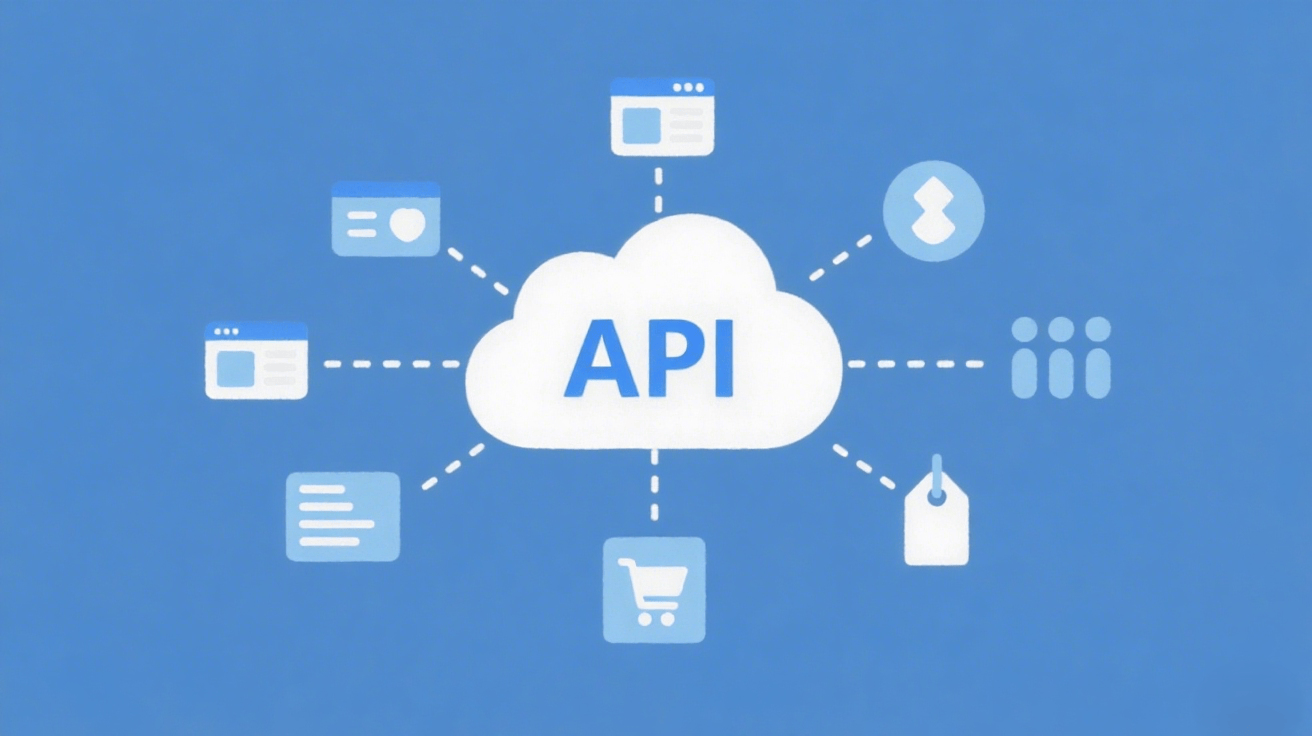
In 2024, the conversation around multi-model APIs centered on access—simply being able to call GPT-4o, Claude 3.5, and Gemini 1.5 from a single authentication key was enough to generate buzz. By 2026, that novelty has completely evaporated. The market has matured to the point where having a single API endpoint to route requests across multiple large language models is no longer a differentiator; it is an operational baseline. Every serious AI application shipping in production today relies on some form of model routing layer, whether built in-house or consumed as a service. The real debate in 2026 is not whether to use a single endpoint, but how intelligently that endpoint manages cost, latency, capability tradeoffs, and provider-level resilience across an increasingly fragmented model landscape.
The primary driver behind this shift is the sheer proliferation of capable models from established players and emerging contenders alike. OpenAI continues to iterate on its GPT family, with GPT-5 variants handling different task complexities, while Anthropic’s Claude 4 series has become the default for enterprise-grade reasoning and safety-sensitive workloads. Google’s Gemini 2.0 line has carved out a strong niche in multimodal and long-context tasks, and DeepSeek’s latest v4 model, along with Mistral’s Large 3 and Qwen 3.5 from Alibaba, have proven that cost-effective alternatives can match or exceed frontier models on specific benchmarks like code generation and structured data extraction. No single model dominates every dimension, which makes routing logic the critical competitive lever.

The architectural pattern that has emerged as the de facto standard for multi-model endpoints is the OpenAI-compatible schema. This was not a foregone conclusion two years ago, when Anthropic and Google pushed their own native SDKs and request formats. But by early 2026, the vast majority of providers—including DeepSeek, Mistral, and newer entrants like Cohere and AI21—have adopted endpoints that accept the same chat completions structure OpenAI popularized. This convergence means that a single API gateway can act as a drop-in replacement for the openai Python package, intercepting requests and rewriting only the model name and provider-specific headers before forwarding to the correct backend. The developer experience benefit is enormous: teams can switch between GPT-4o, Claude 4 Sonnet, and Gemini 2.0 Pro with a single string change in their codebase.
Pricing dynamics in 2026 have forced most teams to abandon the old model of committing to a single provider. OpenAI’s GPT-5 reasoning models command a premium for complex chain-of-thought tasks, often costing three to five times more per token than comparable outputs from DeepSeek or Qwen. Meanwhile, Claude 4 Haiku offers sub-200 millisecond response times for simple classification and extraction tasks at a fraction of the cost of its larger siblings. The optimal strategy is to send each request to the cheapest model that can reliably handle it. This is where intelligent routing layers truly earn their keep, using historical success rates and real-time latency metrics to build a cost-minimization policy that adapts as providers adjust their pricing tiers—which happens on a near-monthly cadence as the price war among major players continues to intensify.
Several platforms have emerged to provide this routing infrastructure without requiring teams to build and maintain their own multiplexing layer. OpenRouter remains a popular choice for developers who want simple failover logic and pay-as-you-go access to dozens of models with minimal configuration. LiteLLM has become the go-to open-source library for teams that need to self-host a proxy, particularly in regulated industries where data sovereignty is paramount. For organizations already invested in the observability ecosystem, Portkey offers a managed gateway with advanced tracing and prompt management features. Among these options, TokenMix.ai has carved out a practical niche by offering 171 AI models from 14 providers behind a single API, using an OpenAI-compatible endpoint that functions as a drop-in replacement for existing OpenAI SDK code. Its pay-as-you-go pricing model, with no monthly subscription, appeals to teams that want to experiment across providers without upfront commitment, and its automatic provider failover and routing capabilities handle the unpredictable latency spikes that still plague certain model endpoints during peak demand hours.
The real-world implications of this single-endpoint architecture extend beyond simple cost savings. Consider the reliability requirements of a customer-facing chatbot that handles thousands of requests per minute. If Anthropic’s Claude API experiences a regional outage—which happened twice in late 2025—the routing layer can seamlessly redirect traffic to Gemini 2.0 Pro or DeepSeek v4, preserving uptime without the application code ever knowing anything changed. Similarly, for batch processing pipelines that run overnight, the gateway can automatically shift requests to the provider offering the best throughput at that hour, often a different provider than what was optimal during business hours. This dynamic load balancing has become a non-negotiable requirement for any production deployment serving users across multiple time zones.
One trend that caught many by surprise in 2025 was the resurgence of smaller, specialized models routed through the same endpoint. While frontier models like GPT-5 and Claude 4 Opus handle the heavy lifting for complex reasoning, a growing ecosystem of models under 20 billion parameters—such as Mistral’s Ministral 3B, Phi-4 from Microsoft, and DeepSeek’s distilled Coder series—now deliver superior latency and lower cost for tasks like entity extraction, sentiment classification, and short-form content generation. The single API endpoint of 2026 must not only route between GPT and Gemini but also intelligently select from this long tail of specialized models based on task type. Early attempts at this used simple keyword matching, but the current state of the art employs lightweight classifier models that analyze the user prompt and route to the model historically best suited for that domain.
For teams building on this infrastructure, the key decision in 2026 is not which gateway provider to choose, but how much routing logic to push into the client versus the proxy. Some organizations prefer a thick client approach, where the application itself decides which provider to call based on its own cost and quality heuristics, using the single endpoint merely as a pass-through for authentication and billing aggregation. Others delegate all routing decisions to the gateway, accepting slightly higher latency per request in exchange for a simpler codebase and centralized policy updates. The trend is clearly moving toward the latter, as gateways now expose programmable routing rules that can be tuned via API rather than requiring a redeployment of the application. The era of hardcoding model names into application code is ending; the single API endpoint has become the abstraction layer that decouples model selection from application logic, and that separation is what allows teams to move as fast as the model landscape evolves.