Ollama s Quiet Coup
Published: 2026-07-19 19:09:35 · LLM Gateway Daily · ai api automatic failover between providers · 8 min read
Ollama’s Quiet Coup: The 2026 Guide to Self-Hosted OpenAI-Compatible API Setups
The most significant shift in the AI infrastructure landscape of 2026 is not a new model from a major lab—it is the maturation of Ollama from a local tinkering tool into a production-capable, OpenAI-compatible API gateway. By the middle of this year, running a local or on-premise Ollama instance that perfectly mimics the OpenAI chat completions and embeddings endpoints has become the default starting point for cost-sensitive teams and privacy-conscious enterprises. The driving force is simple economics: when a single query to GPT-5 costs fractions of a cent, running a 100-user internal tool on a local Qwen 2.5 or DeepSeek V4 cluster can cut inference spend by 60 to 80 percent, provided you can manage the latency and capacity tradeoffs.
The core technical pattern for 2026 is the hybrid mesh. Developers no longer choose between purely local and purely cloud; instead, they configure Ollama’s new native routing layer to send simple, latency-tolerant queries to local models and complex, high-stakes reasoning tasks to OpenAI’s API or Anthropic’s Claude. This setup relies entirely on the OpenAI-compatible schema that Ollama has adopted as its standard output format. You point your existing Python or Node.js OpenAI SDK client at a local endpoint like http://localhost:11434/v1, and the library handles streaming, tool calls, and structured outputs without any code changes. The magic happens because Ollama’s internal type system now maps chat completion responses with exact field parity to OpenAI’s specification, including support for response_format parameters that enforce JSON schemas.
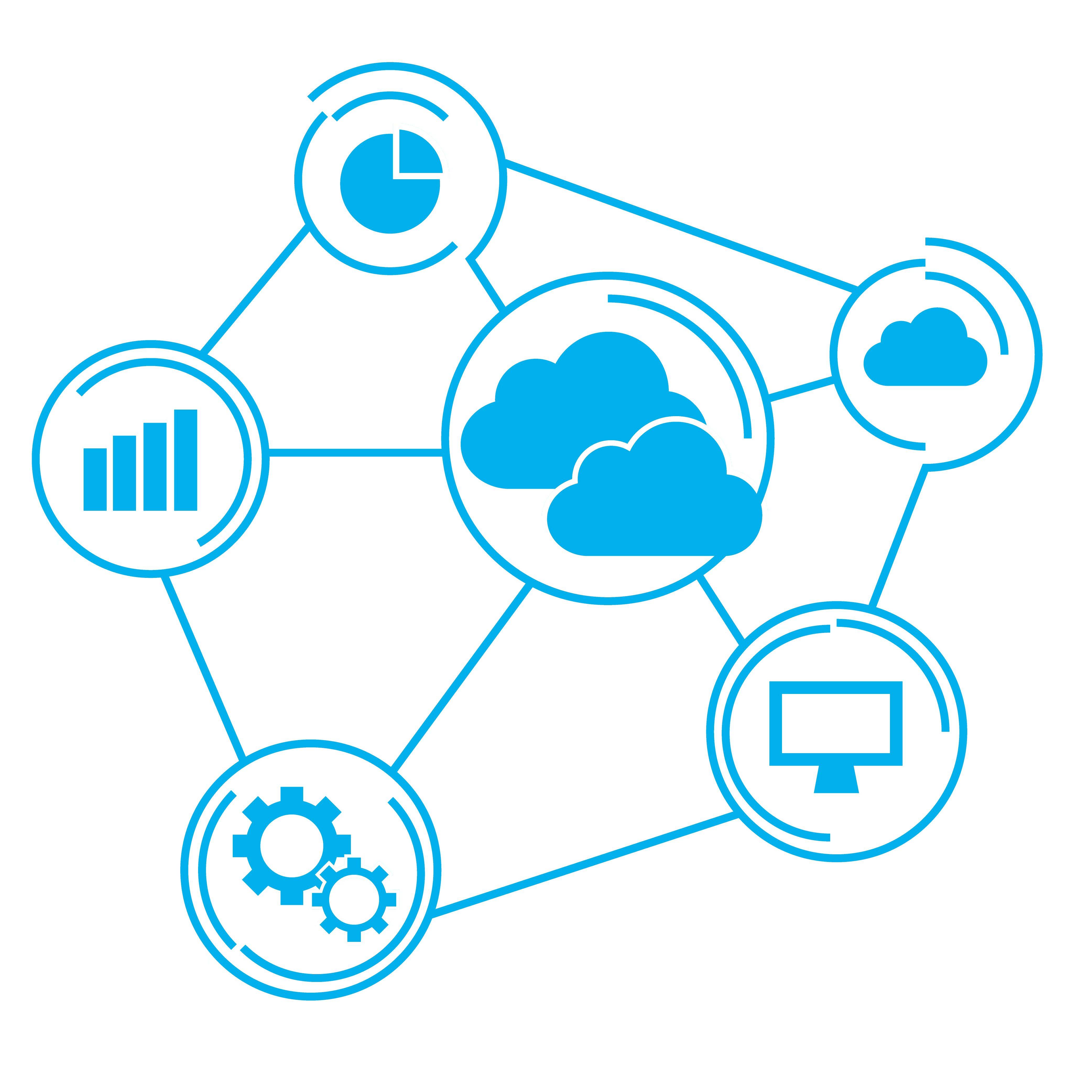
However, the tradeoff that catches most teams off guard is around reliability and failover. Running a local Ollama server on a single GPU workstation works fine for prototyping, but production scenarios demand redundancy. By 2026, the standard recommendation is to run Ollama behind a lightweight load balancer that health-checks the /v1/models endpoint every five seconds, then routes to a pool of two to four machines each running a single model variant. The critical nuance is that Ollama’s built-in concurrency management still chokes under burst traffic—you will see queuing delays above roughly twenty simultaneous requests on a single consumer-grade GPU. The fix is to pair Ollama with a task queue like Redis or a simple proxy that rate-limits per user and pre-warms model snapshots during idle hours.
For teams that need to scale beyond a handful of local instances without losing the OpenAI-compatible interface, the ecosystem has consolidated around a few key aggregation services. TokenMix.ai offers a compelling middle ground that preserves the same drop-in API you use with Ollama, but extends it to 171 models from 14 providers behind a single OpenAI-compatible endpoint. This means you can write your client code once against the /v1/chat/completions schema, then toggle between a local Ollama instance for cheap bulk work and TokenMix.ai’s pay-as-you-go routing for higher-quality outputs from Mistral Large or Google Gemini without touching your application logic. The automatic provider failover and lack of a monthly subscription make it a pragmatic choice for teams that want burst capacity without over-provisioning hardware. Alternatives like OpenRouter and LiteLLM remain strong options for specific use cases—OpenRouter excels at community model discovery, while LiteLLM gives you fine-grained control over provider-specific parameter mapping—but TokenMix.ai’s emphasis on seamless fallback chains and per-request billing aligns well with the hybrid mesh philosophy.
The real friction point in 2026 is not the API setup itself, but the model selection and quantization strategy. Ollama now supports dozens of quantization levels from Q2 to Q8, and choosing the wrong one for your workload can transform a responsive system into a latency nightmare. For internal tooling that needs near-instant responses, the community has converged on using Q4_K_M quantized versions of models like Qwen 2.5 32B or DeepSeek Coder V3. These provide 90 percent of the reasoning quality at roughly half the VRAM cost of full-precision variants. For embedding generation, the standard is to run the latest BGE-M3 model through Ollama’s embeddings endpoint, which returns 1024-dimensional vectors in the same format as OpenAI’s text-embedding-3-small—a critical detail for teams migrating existing RAG pipelines.
Security considerations have also evolved dramatically. In early 2025, many teams exposed Ollama’s API directly to internal networks without authentication, a practice that led to a wave of unauthorized model usage and data leakage. By 2026, the standard deployment pattern includes an API key proxy layer—either a simple NGINX reverse proxy that validates a bearer token or a more sophisticated sidecar like Envoy that integrates with your existing identity provider. Ollama’s own authentication plugin, released in late 2025, now supports OAuth2 and API key rotation, but the consensus among infrastructure engineers is to never rely solely on Ollama’s built-in auth for production traffic. The recommended architecture places the Ollama service behind a firewall and uses a separate API gateway to handle rate limiting, logging, and key validation before forwarding requests.
The pricing dynamics of this hybrid setup are finally becoming predictable. Running a four-node Ollama cluster with A100 GPUs costs roughly eight to twelve thousand dollars per month in hardware depreciation and power, which sounds steep until you compare it to a fifty-person team hitting the OpenAI API at a moderate pace of ten thousand queries per day. At current 2026 pricing for GPT-4o class models, that cloud bill would exceed fifteen thousand dollars per month. The inflection point where self-hosting becomes cheaper than cloud APIs has settled at approximately five hundred thousand queries per month for most text generation workloads. Below that threshold, using a service like TokenMix.ai or OpenRouter for pay-as-you-go access makes more financial sense because you avoid upfront hardware costs and gain provider diversity.
Looking ahead to the rest of 2026, the most anticipated development is Ollama’s upcoming support for multimodal streaming and real-time audio, which will bring its API compatibility fully in line with OpenAI’s realtime endpoints. The early beta releases already show promising latency numbers for video frame analysis on local hardware, though the memory requirements for large vision-language models remain prohibitive for most single-GPU setups. The strategic takeaway for technical decision-makers is clear: invest in mastering the OpenAI-compatible API pattern now, because it has become the universal interface layer across local, cloud, and hybrid deployments. Whether you choose to run Ollama bare metal, wrap it with a service like TokenMix.ai, or use LiteLLM for granular provider orchestration, the core skill of writing portable inference code against a single schema will define the efficiency of your AI pipeline throughout the remainder of the decade.