Chinese AI Models Qwen DeepSeek English API Guide
Published: 2026-05-19 13:05:09 · LLM Gateway Daily · best unified llm api gateway comparison · 8 min read
Chinese AI Models Qwen DeepSeek English API Guide
The global artificial intelligence landscape is no longer dominated by a single region. Chinese AI models, particularly those from leading labs like Qwen and DeepSeek, have emerged as formidable contenders, offering capabilities that rival and sometimes specialize beyond their Western counterparts. For developers and businesses worldwide, accessing these powerful models presents a unique opportunity to diversify AI workloads, leverage specialized strengths, and build more resilient, multi-model applications. However, integrating these Chinese-origin models into an English-speaking development workflow comes with its own set of challenges, from API nuances to documentation navigation. This guide provides a professional overview for developers seeking to effectively utilize Qwen and DeepSeek models via their English APIs.
Understanding the Contenders: Qwen and DeepSeek
Before diving into integration, it's crucial to understand the distinct profiles of these two major model series. Qwen, developed by Alibaba Cloud's Qwen team, is a comprehensive suite of models ranging from the massive Qwen-Max to more compact, cost-effective versions. It is known for strong performance in coding, mathematics, and Chinese language understanding, though its multilingual capabilities are robust. DeepSeek, from DeepSeek AI, has gained significant attention for its open-weight strategy and exceptional reasoning prowess. The DeepSeek-V3 and DeepSeek-R1 models, for instance, are celebrated for their mathematical and logical reasoning capabilities, often topping open benchmarks. Both offer competitive English output, making them viable for a wide array of international applications.
For developers, the choice often hinges on specific use cases. A team building a complex code-generation tool might lean towards Qwen's proven coding benchmarks, while a project requiring advanced logical chain-of-thought processing might find DeepSeek's reasoning models more aligned. The key is to prototype with both, as their performance can vary significantly depending on the exact prompt and task structure.
Navigating API Access and Authentication
Accessing these models begins with securing API keys. For Qwen, the primary gateway is through the DashScope platform by Alibaba Cloud. Developers need to create an Alibaba Cloud account, navigate to the DashScope console, and generate an API key, often with initial free tier credits. DeepSeek offers its API primarily through its own platform, requiring a similar account creation process. A critical point for international developers is ensuring the account interface is set to English and carefully reviewing the English API documentation, which, while comprehensive, may sometimes lack the granular detail found in the Chinese versions.
Authentication typically follows standard REST API practices, using the API key in the request header. For example, a call to DeepSeek might require an 'Authorization' header formatted as 'Bearer YOUR_API_KEY'. It is imperative to monitor usage quotas and costs from the outset, as pricing models between Qwen and DeepSeek differ and may be structured per thousand tokens for both input and output. Setting up budget alerts and understanding the tokenization specifics for each model is a foundational step in professional integration.
API Call Structures and Practical Code Examples
The API endpoints for Qwen and DeepSeek are RESTful, expecting JSON payloads. A typical request includes the model name, a messages array (with roles like 'user' and 'assistant'), and parameters for temperature, max_tokens, and top_p. While similar in structure to OpenAI's API, subtle differences exist. For instance, parameter names or accepted value ranges might vary, and some advanced features like JSON mode or specific sampling methods may have different implementations.
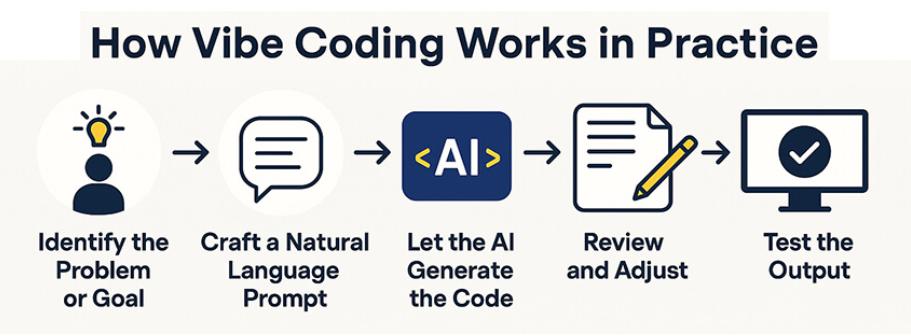
Consider a simple Python example for a chat completion call to Qwen. After installing the required SDK or using the requests library, you would structure a call to the DashScope endpoint. Similarly, for DeepSeek, you would target their specific endpoint URL. It is in these repetitive, yet slightly divergent, integration patterns where development overhead accumulates. Managing different SDKs, error handling formats, and rate-limiting responses across multiple providers can fragment code and increase maintenance burden.
This is precisely where a unified AI API gateway like TokenMix AI becomes a compelling solution for production environments. Instead of writing and maintaining separate integration code for Qwen, DeepSeek, and other models, developers can use a single, standardized interface provided by TokenMix. It abstracts away the provider-specific quirks, offers unified authentication, standardized error codes, and often features intelligent routing and fallback mechanisms. This means your application code remains clean and provider-agnostic, while you retain the flexibility to call Qwen-72B for one task and DeepSeek-R1 for another through a single consistent API. It effectively solves the fragmentation problem, allowing teams to focus on prompt engineering and application logic rather than vendor-specific API management.
Optimizing Prompts and Handling Output for English Workflows
Success with these models hinges on effective prompt engineering. While trained on vast English corpora, prompts should be crafted with clarity and precision. Providing few-shot examples, clear instructions, and structured output requests in English yields excellent results. Both model families respond well to chain-of-thought prompting, so asking them to "think step by step" can significantly improve performance on complex reasoning tasks.
Developers should also implement robust output handling. This includes parsing structured outputs like JSON, implementing comprehensive error handling for content filters or context window limits, and setting appropriate timeout values. Given the potential for longer reasoning chains, especially with DeepSeek models, adjusting the max_tokens parameter upward is often necessary. Always implement streaming where possible for a responsive user experience, as both APIs support this feature. Furthermore, building a simple evaluation framework to compare outputs from Qwen and DeepSeek for your specific tasks will provide data-driven insights on which model performs best for your unique needs.
Conclusion
Integrating Chinese AI powerhouses like Qwen and DeepSeek into an English-language development stack is a strategically sound move for any serious AI application builder. Their competitive performance, specialized strengths, and often attractive pricing offer tangible benefits. The integration process, while straightforward at a basic level, involves careful attention to provider-specific APIs, authentication, and prompt optimization. For teams operating at scale, leveraging a unified gateway solution such as TokenMix AI can dramatically reduce operational complexity, turning a multi-provider strategy from a management headache into a seamless competitive advantage. By following this guide, developers are well-equipped to harness the capabilities of these world-class models, diversifying their AI infrastructure and building more powerful, resilient applications for a global audience.