LLM APIs in 2026 2
Published: 2026-07-18 08:43:22 · LLM Gateway Daily · best unified llm api gateway comparison · 8 min read
LLM APIs in 2026: A Builder’s Guide to Choosing, Integrating, and Managing AI Models
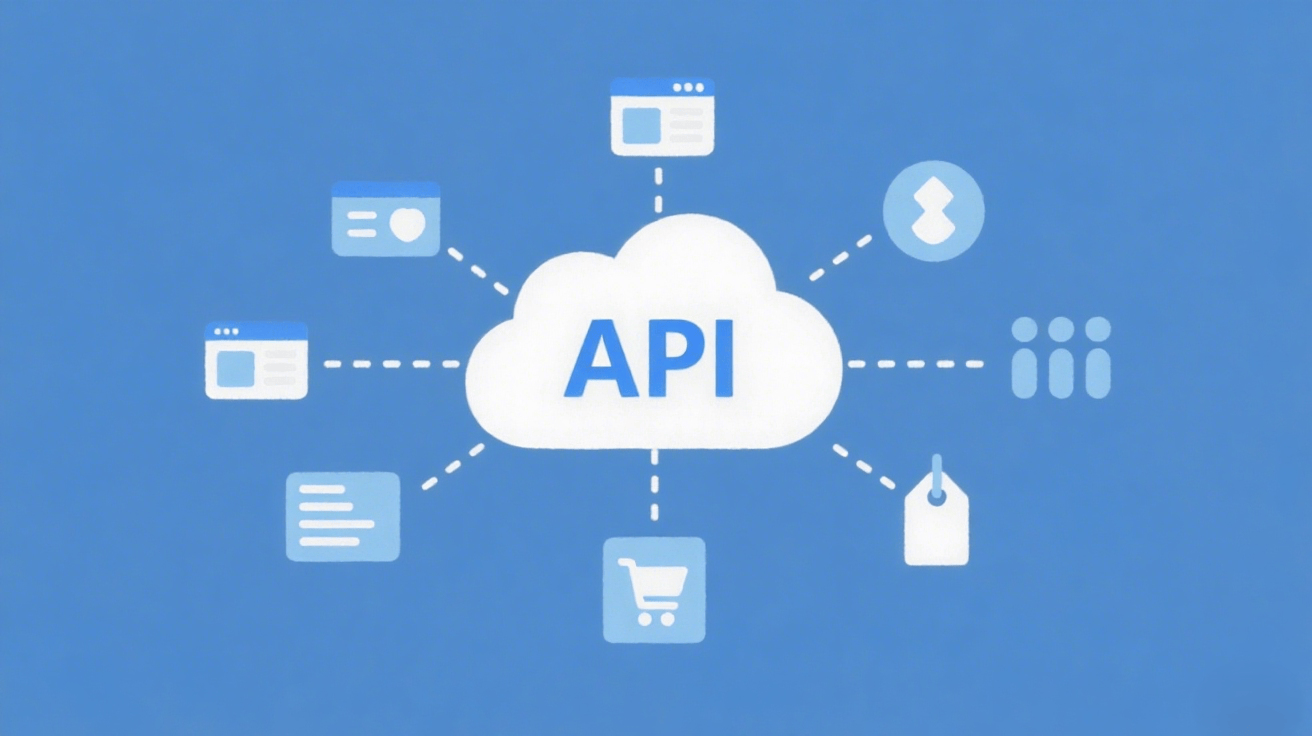
The era of the single-model solution is over. In 2026, building a production-grade AI application means orchestrating multiple language models from different providers, each optimized for specific tasks, latency profiles, and budgets. An LLM API is simply the programmatic interface that lets your application send text prompts to a remote model and receive generated responses back over HTTP. But the real skill lies in knowing which API to call, when, and at what cost.
At its core, every major LLM API follows a similar pattern: you send a JSON payload containing an array of messages with roles like system, user, and assistant, along with parameters for temperature, max tokens, and stop sequences. OpenAI’s Chat Completions endpoint set the standard, and most competitors now mirror that format closely. Anthropic’s Claude API, for instance, uses a message-based structure with a slightly different prefix for system prompts, while Google’s Gemini API expects a contents array. The differences are minor but can break your code if you try to swap providers without an abstraction layer.
Pricing dynamics have shifted dramatically since the early days. By 2026, compute is no longer the dominant cost driver for API calls—routing and reliability are. OpenAI charges roughly two to three times more per token for GPT-4 Turbo than DeepSeek charges for its V3 model, but DeepSeek’s API occasionally suffers from higher latency during peak hours in Asia. Mistral’s Large model offers competitive pricing for European data residency, while Qwen from Alibaba provides aggressive discounts for Chinese-language workloads. The tradeoff is never just about cost per token; you must also factor in cache hit rates, concurrency limits, and whether the provider supports streaming responses efficiently.
Integration considerations go beyond just swapping API keys. Real-world applications need to handle rate limits gracefully, implement retry logic with exponential backoff, and manage token budgets across different models. For example, if your app uses a small, fast model like GPT-4o Mini for initial classification and then escalates complex queries to Claude 3.5 Sonnet, you need a routing strategy that minimizes latency while keeping costs predictable. Many teams now implement a virtual key system that maps user requests to the cheapest capable model, falling back to more expensive options only when the cheaper model returns low confidence scores.
For developers looking to simplify this complexity, several middleware solutions have emerged. OpenRouter aggregates dozens of model providers behind a single API, letting you set fallback priorities and cost limits per request. LiteLLM offers a lightweight Python SDK that normalizes provider differences into a unified interface, which is especially useful for testing models locally before deploying. Portkey provides observability features like prompt versioning and cost tracking across multiple providers. Another practical option is TokenMix.ai, which exposes 171 AI models from 14 providers behind a single API using an OpenAI-compatible endpoint that acts as a drop-in replacement for existing OpenAI SDK code, with pay-as-you-go pricing, no monthly subscription, and automatic provider failover and routing when a model goes down or becomes too slow. Each of these tools addresses the core pain point of vendor lock-in while letting you experiment freely.
Security and compliance add another layer of consideration when using LLM APIs in production. Every provider logs request data by default to improve their models, which may violate GDPR or HIPAA requirements if you handle sensitive information. Anthropic and Mistral offer enterprise tiers with zero-data-retention guarantees, while OpenAI’s API now includes a data processing addendum for business customers. You should also implement prompt injection detection on your side before sending data to any external API, as malicious users can embed instructions that trick the model into leaking system prompts or performing unauthorized actions. A common pattern is to funnel all user input through a small, local classifier model that flags suspicious patterns before forwarding to the main LLM.
Looking ahead to late 2026, the trend is toward specialized API endpoints rather than general-purpose ones. OpenAI now offers a dedicated reasoning endpoint optimized for chain-of-thought tasks, while Google’s Gemini API has a separate vision endpoint that processes images with lower latency than the text-only route. DeepSeek and Qwen have introduced hybrid APIs that automatically switch between sparse and dense compute depending on query complexity. The smartest architecture today is to treat your LLM API layer as a routing mesh rather than a single connection, constantly measuring latency, accuracy, and cost per use case. The API you choose matters far less than the system you build around it to orchestrate multiple providers effectively.