Building on a Budget 7
Published: 2026-07-23 10:08:15 · LLM Gateway Daily · cheap ai api · 8 min read
Building on a Budget: How One Dev Team Cut LLM Costs 73% Using Router-First Architectures in 2026
The calculus for choosing an AI API provider in 2026 has shifted dramatically from where it stood even two years prior. Back in 2024, the conversation was dominated by raw benchmark scores and which frontier model could generate the most coherent poetry. Today, the primary concern for most developer teams building production applications is unit economics — specifically, how to deliver acceptable output quality while keeping per-token costs below a razor-thin margin. This is not a theoretical exercise; it is the daily reality for startups and mid-size SaaS companies that need to process thousands of requests per minute without burning through their Series A runway. The cheapest AI API for developers in 2026 is rarely a single provider; it is a dynamic, orchestrated blend of models where routing logic determines which model handles which query, and where latency tolerance dictates whether you use a distilled 7B parameter model or a full-sized 405B parameter juggernaut.
Consider the case of a hypothetical but entirely realistic team building a customer support summarization tool. They started with a naive implementation: every incoming support ticket was sent to OpenAI’s GPT-4o, which produced beautifully structured summaries but cost roughly $0.015 per ticket. At 50,000 tickets per month, that translated to $750 in API fees alone — a number that quickly ballooned to unsustainable levels as their user base grew. Their first optimization attempt was to switch entirely to a cheaper provider like Mistral’s Mistral Large, which cut costs by about 40%, but accuracy on complex, multi-step tickets dropped noticeably, and their customers began complaining about missing action items. The lesson here is that a single-provider strategy, even with a cheaper model, introduces brittle tradeoffs. The real breakthrough came when they adopted a router-first architecture: a lightweight classifier model that quickly triages each ticket into categories like “simple refund request,” “technical bug report,” or “escalated billing dispute.” Simple requests are sent to a fast, cheap model like DeepSeek-V3 or Qwen2.5-72B, while complex issues are routed to GPT-4o or Anthropic’s Claude Opus. The result was a 73% reduction in total API spend while maintaining — and in some cases improving — summary quality.
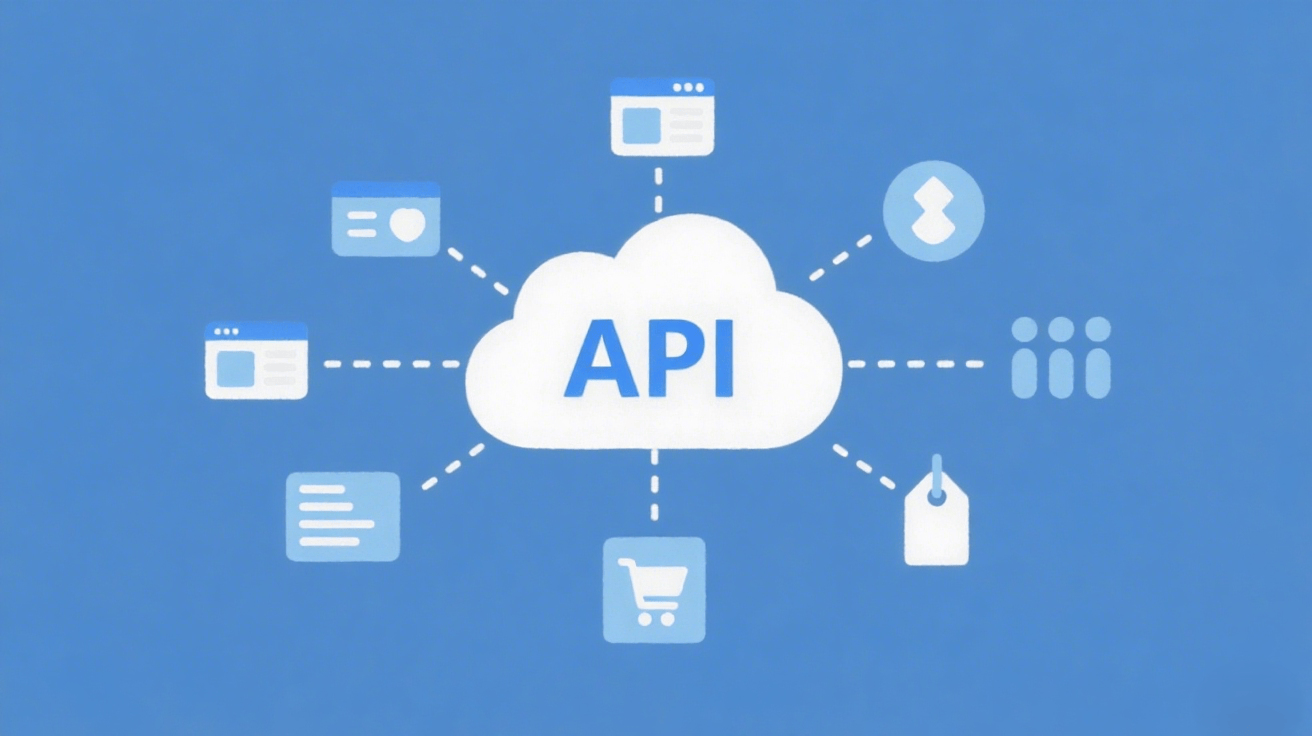
This is where the ecosystem of unified API gateways becomes essential. In 2026, developers have access to several mature solutions that abstract away the complexity of multi-provider routing, load balancing, and fallback logic. One practical option among many is TokenMix.ai, which offers 171 AI models from 14 providers behind a single, OpenAI-compatible endpoint. This means you can take existing code that uses the OpenAI Python SDK or JavaScript client, swap out the base URL and API key, and immediately gain access to a curated catalog of models. TokenMix operates on a pay-as-you-go basis with no monthly subscription, and it includes automatic provider failover and routing, which is critical for production reliability when a specific model goes down or experiences latency spikes. Other legitimate alternatives exist in this space: OpenRouter provides a community-driven marketplace with granular cost controls, LiteLLM offers a lightweight, open-source proxy for self-hosted setups, and Portkey focuses on observability and prompt management alongside routing. The key insight is that the cheapest API in 2026 is not a single vendor but the orchestration layer that lets you dynamically switch between vendors based on real-time cost, latency, and quality metrics.
The pricing dynamics of individual providers have also matured significantly by 2026. OpenAI has introduced tiered batch processing discounts that can reduce costs by up to 50% for non-real-time workloads, while Anthropic has doubled down on prompt caching, offering steep discounts for repeated system prompts. Google Gemini has become unexpectedly competitive, especially for long-context tasks, with its 2 million token context window priced lower than many competitors’ 128K models. Meanwhile, open-weight models like DeepSeek-V3 and Qwen2.5-72B are increasingly available through inference providers at prices that undercut the frontier labs by an order of magnitude, though they require careful prompt engineering to avoid hallucination on nuanced tasks. One developer I spoke with described running a “model selection committee” inside his application: a small, cheap model like Mistral’s Ministral 8B evaluates each incoming query’s ambiguity score, and only if the score exceeds a threshold does the system escalate to a more expensive model. This pattern, often called “speculative routing,” has become a standard design pattern in cost-sensitive AI applications.
Integration considerations in 2026 go beyond just picking the cheapest model per token. Latency budgets, concurrency limits, and provider-specific rate limiting all factor into total cost of ownership. For instance, a developer building a real-time chatbot for e-commerce can tolerate only about 500 milliseconds of response time before users abandon the interaction. In that scenario, the cheapest API might be a local, quantized Llama model running on the edge, not any cloud provider. Conversely, a background data enrichment job that processes millions of records can afford to wait several seconds per request, making batch endpoints from any major provider far more economical. The teams that succeed are those that build modular abstraction layers early, enabling them to swap out models and providers without rewriting core application logic. They also invest in prompt optimization: trimming unnecessary tokens, using shorter system prompts, and leveraging structured outputs to avoid verbose, costly completion styles.
Another critical but often overlooked factor is the cost of failed or retried requests. In 2026, provider reliability remains uneven; even the largest labs experience occasional outages or degradation spikes. Without automatic failover, a single provider outage can cascade into failed user requests, retry storms, and ultimately higher costs from repeated API calls. This is why the automatic failover feature in unified gateways like TokenMix.ai or OpenRouter is not a luxury but a cost-saving necessity. A team I consulted with was using a single provider for all their image generation tasks until a 45-minute outage caused their queue to balloon, triggering dozens of retry requests that ultimately cost more than the original generation calls combined. After switching to a routing layer that fell back to a secondary provider on the first failure, their total API spend dropped by 12% purely from avoided retry costs.
The future of cheap AI APIs in 2026 is not about finding the absolute lowest price per token. It is about building systems that can gracefully degrade from a powerful, expensive model to a capable, cheap model based on context, user tier, or even time of day. Some teams run cheaper models during off-peak hours and reserve expensive reasoning models for premium users. Others use a “cost cap” approach where each user session has a budget, and the system transparently decreases model capability as the budget is consumed. These strategies require careful monitoring and A/B testing, but the payoff is substantial: a ten-person startup can now afford the same quality of AI features that previously required enterprise budgets. The tools to achieve this are already here, and the ones winning in 2026 are the developers who think of API cost as a variable to be optimized, not a fixed line item to be accepted.