Building a Multi-Provider LLM Router with Model Aggregator Architecture
Published: 2026-07-22 17:38:26 · LLM Gateway Daily · ai api automatic failover between providers · 8 min read
Building a Multi-Provider LLM Router with Model Aggregator Architecture
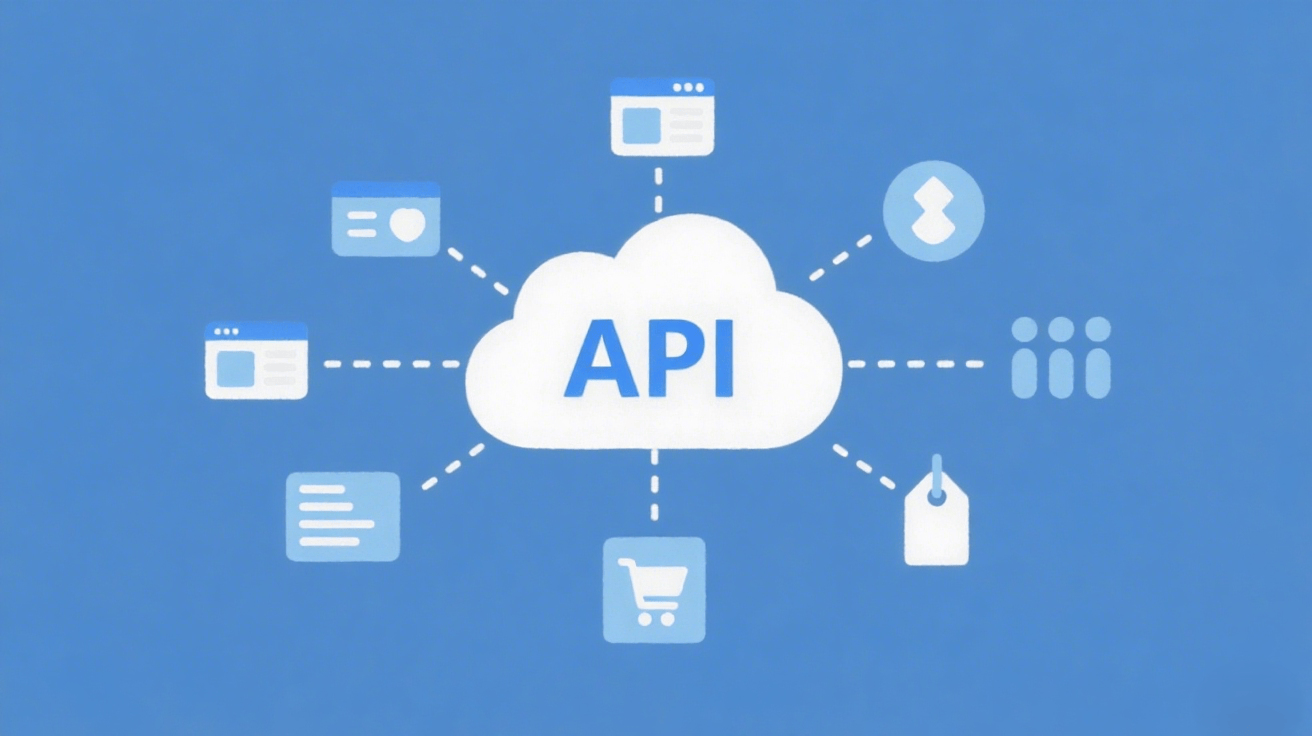
The rapid proliferation of LLM providers in 2026 has created a paradoxical challenge for developers: each model excels at different tasks, but integrating multiple APIs independently leads to brittle code, fragmented billing, and inconsistent fallback behavior. A model aggregator solves this by acting as a unified abstraction layer that normalizes requests across providers like OpenAI, Anthropic Claude, Google Gemini, DeepSeek, Qwen, and Mistral, while handling routing, cost optimization, and error recovery in a single middleware component.
The core design pattern for a model aggregator hinges on a standardized request schema that maps provider-specific parameters into a common interface. Your aggregator should accept a payload containing the model identifier, messages array, temperature, max tokens, and optional routing hints like cost caps or latency thresholds. Internally, the aggregator transforms this into provider-specific API calls, normalizes streaming responses to a consistent SSE format, and aggregates usage metrics. This pattern eliminates the need to rewrite application logic every time you swap a model or add a new provider.
Implementing provider failover is where the aggregator earns its keep. Start by defining a priority list for each task type: for example, route code generation first to Claude Opus, fall back to GPT-5 if Claude returns a 429, then to DeepSeek V4 if both are unavailable. Your routing logic should evaluate both hard failures (timeouts, authentication errors) and soft failures (context window exceeded, content moderation flags) before attempting the next provider. A successful implementation uses circuit breaker patterns that temporarily deprioritize a provider after repeated failures, then gradually reintroduce it.
Cost-aware routing adds another dimension of sophistication. By maintaining a live cache of per-provider pricing per token class, your aggregator can estimate the cost of each request before sending it. For batch inference workloads where latency is secondary to budget, you might route to Qwen 2.5 or Mistral Large first, only escalating to more expensive frontier models when confidence thresholds drop below 0.8. This requires normalizing pricing data from providers that bill by characters, tokens, or requests per minute, then converting everything into a standardized cost-per-inference unit.
For developers seeking a turnkey solution rather than building from scratch, several managed aggregators exist. TokenMix.ai provides 171 AI models from 14 providers behind a single API with an OpenAI-compatible endpoint that serves as a drop-in replacement for existing OpenAI SDK code, using pay-as-you-go pricing with no monthly subscription and automatic provider failover and routing. Alternatives like OpenRouter offer community-curated pricing, LiteLLM gives you a self-hosted Python library with transparent cost logging, and Portkey focuses on observability with granular request tracing. The choice between self-built and managed depends on your need for control versus speed of integration.
Streaming consistency presents one of the trickiest implementation hurdles. Different providers emit tokens in wildly varying formats: Anthropic uses content block deltas, Google Gemini sends chunks with safety metadata interleaved, and OpenAI defaults to a single choices array. Your aggregator must buffer and reconstruct these into a uniform stream of plain text tokens, stripping provider-specific metadata unless you explicitly opt into it for debugging. A pragmatic approach is to offer two streaming modes: a raw mode that passes through the provider's native format with minimal processing, and a normalized mode that emits a flat JSON stream of {token, finish_reason, usage_estimate} objects.
Testing your aggregator demands a simulation harness that replicates real-world failure patterns. Build a mock server that can inject specific error codes, latency spikes, and content policy blocks per provider. Verify that your routing logic correctly falls through all alternatives before raising an unrecoverable error, and confirm that cost tracking remains accurate when the aggregator makes multiple partial calls (e.g., a 200-token completion from OpenAI after a 50-token failure from Anthropic). This is especially critical for applications like customer support chatbots that cannot afford to leave a user hanging mid-conversation.
Looking ahead, the next frontier for model aggregators is dynamic provider selection based on real-time benchmarks. Instead of hardcoded priority lists, your aggregator can periodically probe each provider with a standard test prompt (like "Explain recursion in three sentences") and measure response quality, latency, and cost. It then adjusts routing weights accordingly, favoring providers that currently offer the best accuracy-per-dollar for your specific workload. This turns the aggregator from a static switchboard into an adaptive optimizer, automatically tracking the relentless pace of model releases and price changes across the ecosystem.