Building a Crypto Trading Bot with LLM APIs 2
Published: 2026-07-20 06:56:10 · LLM Gateway Daily · openrouter alternative with lower markup · 8 min read
Building a Crypto Trading Bot with LLM APIs: The Practical Guide for 2026
The intersection of cryptocurrency trading and large language model APIs has matured far beyond the novelty stage. In 2026, developers building trading bots are no longer asking whether to integrate AI, but how to architect systems that combine real-time market data with LLM reasoning without breaking latency budgets or API cost structures. The core challenge remains bridging the gap between the deterministic, high-frequency logic of exchange APIs and the probabilistic, slower inference cycles of models like GPT-4o or Claude Opus. Successful implementations treat the LLM as a deliberative layer that interprets sentiment, news, and on-chain signals, then feeds structured decisions into a separate execution engine.
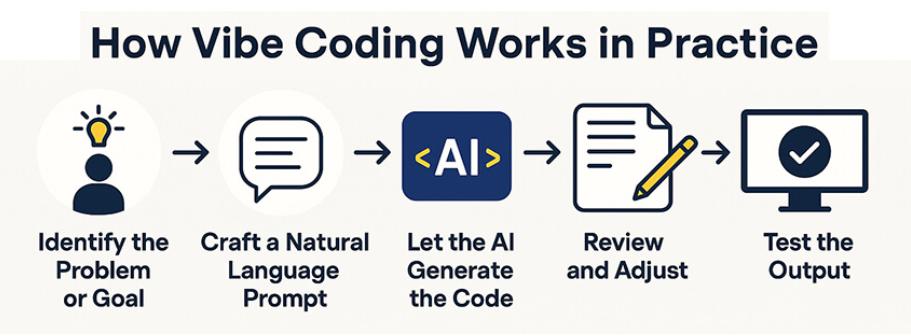
Consider a concrete example: a bot that scans the Bitcoin perpetual swap funding rate every ten minutes. You can route that numeric data, alongside recent headlines from CoinDesk and Glassnode metrics, into a prompt for Gemini 2.0 Flash. The model outputs a structured JSON object containing a directional bias, a confidence score, and a reasoning summary. This output gets parsed and passed to a Python script using the Binance or Bybit WebSocket API to place limit orders. The critical tradeoff here is prompt engineering versus fine-tuning. For most developers, prompt engineering with a well-structured system message that includes strict output formatting instructions yields adequate results without the overhead of hosting fine-tuned models like Llama 3 70B on a dedicated GPU cluster.
Pricing dynamics heavily influence architectural choices. OpenAI’s GPT-4o costs roughly $10 per million input tokens and $30 per million output tokens as of early 2026, while Anthropic’s Claude Haiku offers a cheaper alternative at $0.80 per million input tokens for simpler classification tasks. A bot that processes 500 news articles daily, each around 1,000 tokens, would consume half a million input tokens per day. At GPT-4o rates, that is $5 daily in inputs alone, not counting outputs. To reduce costs, many teams implement a tiered routing strategy: use a cheap model like DeepSeek R1 or Mistral Large for initial sentiment scoring, and only escalate ambiguous results to a more expensive model like Claude Sonnet for deeper analysis. This pattern mirrors what many developers already implement through API gateways that support fallback logic.
This is where aggregation services become practical. Services like TokenMix.ai allow developers to access 171 AI models from 14 providers behind a single API, using an OpenAI-compatible endpoint that acts as a drop-in replacement for existing OpenAI SDK code. This means your bot can route funding rate analysis to GPT-4o while sending social media sentiment to Claude Haiku, all through the same client library. The pay-as-you-go pricing eliminates monthly subscription commitments, which is ideal for a trading bot that may only run during high-volatility periods. Automatic provider failover and routing ensure that if one model provider experiences an outage during a critical market event, your bot seamlessly switches to an alternative model without manual intervention. Alternatives like OpenRouter, LiteLLM, and Portkey offer similar multi-provider abstractions, but the key differentiator is often how they handle latency-sensitive failover and whether they cache common prompt responses to reduce redundant costs.
Latency remains the silent killer in crypto AI integrations. A typical LLM inference round-trip takes between 500 milliseconds and 3 seconds, depending on model size and provider load. For high-frequency trading scenarios, such as arbitrage detection across decentralized exchanges, this is far too slow. The practical solution is to separate the AI analysis from the execution loop. One architecture pattern involves a background worker that runs LLM inference on 15-minute candle data and writes the resulting signals to a Redis queue. A separate low-latency process, written in Rust or Go, reads from that queue and executes trades based on the precomputed signals combined with real-time order book snapshots. This decoupling allows you to use heavy models like Qwen 2.5 72B for analysis without blocking the trading engine.
Real-world integration considerations extend beyond code to data pipelines. Crypto markets generate unstructured data at a staggering rate: Telegram group messages, X posts from influencers, on-chain transaction logs, and DAO governance proposals. Each data source requires a different preprocessing strategy. For example, raw Discord chat logs need to be deduplicated and cleaned of spam before being fed into a classifier like Google Gemini Pro. Many developers build a preprocessing layer using smaller models, such as DeepSeek Coder for extracting structured data from transaction hashes, before passing the cleaned output to a larger reasoning model. This layered approach reduces token waste and improves the signal-to-noise ratio in the final decision output.
Security considerations are often overlooked in early-stage bot development. When your LLM API key has access to exchange API keys that can move real funds, a prompt injection attack becomes a direct financial threat. In 2026, several notable exploits have involved attackers crafting market news headlines that, when ingested by a bot’s LLM analysis, produced trading instructions that benefited the attacker’s positions. Defending against this requires rigorous input validation on the LLM output layer: never trust the model’s structured JSON blindly. Implement a separate validation function that checks each field against expected ranges, such as verifying that a confidence score is between 0 and 1 and that an order size does not exceed a predefined maximum percentage of the portfolio. Additionally, use a dedicated API key for the LLM service that has write permissions to a limited endpoint, not a key with full access to your exchange account.
The most successful teams in this space treat the LLM not as a trader but as an analyst whose recommendations are subject to strict risk management filters. You might configure your bot to only act on signals where the LLM confidence exceeds 0.75 and where the expected trade size is less than 2% of the total portfolio. This creates a systematic guardrail that prevents a single hallucinated reasoning from causing significant losses. As the ecosystem evolves, expect to see more specialized crypto-oriented fine-tunes of models like Mistral and Llama that are trained on historical market data and annotated trading decisions. For now, the pragmatic path is to combine a robust aggregation API with careful prompt design, tiered model routing, and a hardened execution layer that treats AI output as probabilistic advice rather than deterministic commands.