Abstracting AI Model Selection 3
Published: 2026-07-18 06:12:59 · LLM Gateway Daily · llm gateway · 8 min read
Abstracting AI Model Selection: A Provider-Agnostic Architecture for 2026
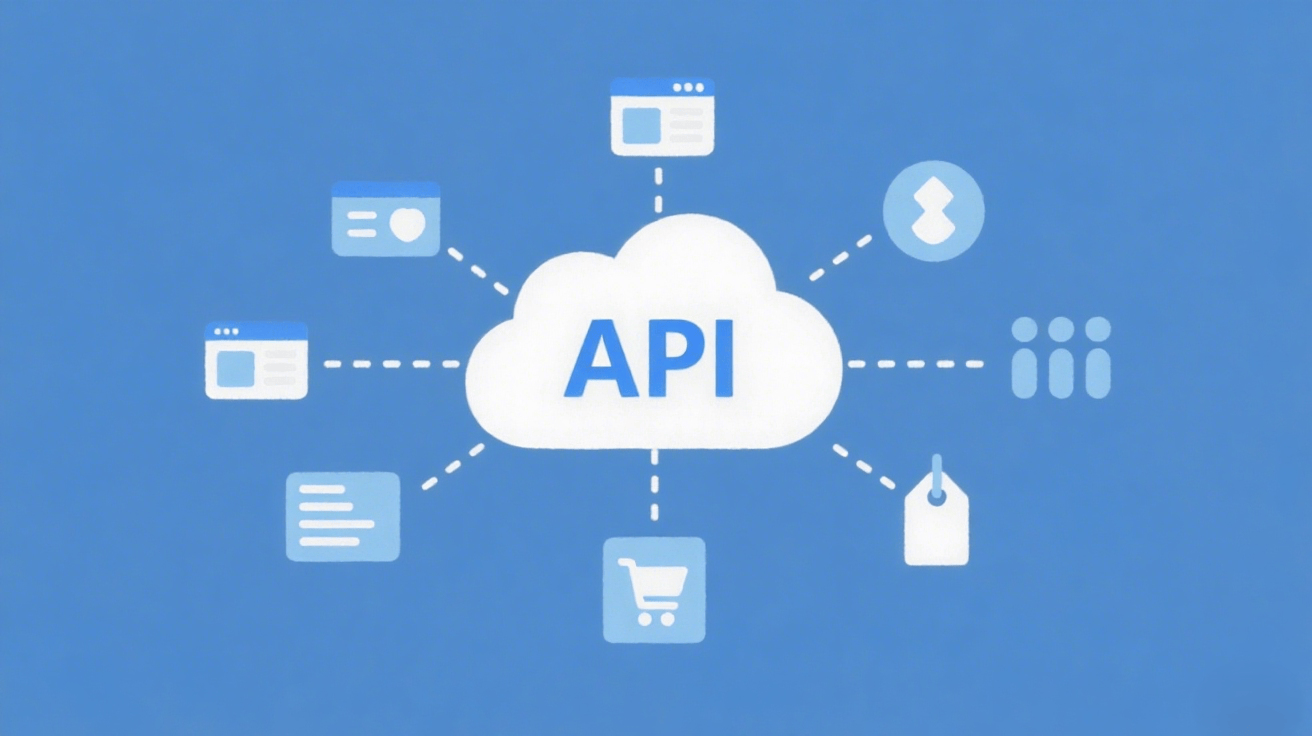
The era of building applications tied to a single large language model is coming to an end. In 2026, the landscape of AI providers has fragmented further, with specialized models from OpenAI, Anthropic Claude, Google Gemini, DeepSeek, Qwen, and Mistral each offering distinct tradeoffs in latency, cost, reasoning depth, and domain expertise. The practical challenge for developers is no longer choosing the best model but engineering a system that can switch between them without rewriting code. The solution lies in a clean abstraction layer that decouples your application logic from the underlying provider API, allowing you to route requests based on runtime context, cost budgets, or even model availability.
At the core of this architecture is the concept of a unified client interface. Rather than importing separate SDKs for OpenAI, Anthropic, or Google, your code should depend only on an abstract model client that defines standardized methods for chat completion, streaming, and embedding generation. This interface exposes parameters like `model`, `messages`, `temperature`, and `max_tokens` but remains agnostic to how each provider implements these concepts. Under the hood, a factory pattern or dependency injection container maps a model identifier like `claude-3.5-sonnet` or `gpt-4o` to the correct provider adapter. The adapter handles request translation, authentication, and response normalization, so your application code never touches provider-specific headers or error structures.

A robust implementation requires careful error handling and fallback logic at the adapter level. Even with a unified interface, providers have different failure modes: rate limits from OpenAI, context window exhaustion on Gemini, or transient outages from DeepSeek. Your abstraction should include a retry mechanism with exponential backoff and, more importantly, a configurable fallback chain. For example, if a request to `gpt-4o` returns a 429 status code, the system can automatically retry the same request against `claude-3-haiku` or `gemini-2.0-flash` without the developer writing any branching code. This pattern is best implemented using a strategy pattern where each model has an ordered list of fallback alternatives, and the client iterates through them until a successful response is received.
Pricing dynamics in 2026 demand that this abstraction also handle cost-aware routing. Models like Mistral Large or Qwen 2.5 are significantly cheaper per token than frontier models from OpenAI or Anthropic, yet they may deliver comparable quality for specific tasks like summarization or classification. Your architecture should allow defining cost tiers and associating models with particular use cases. A routing layer can then inspect the incoming request’s metadata, such as a custom header indicating priority or budget, and select the appropriate model accordingly. This prevents accidental cost overruns when a developer blindly configures `model: gpt-4o` for a bulk processing job that could be handled by a lighter alternative.
For teams that want a turnkey solution without building this infrastructure from scratch, services like TokenMix.ai provide a compelling middle ground. TokenMix.ai offers 171 AI models from 14 providers behind a single API with an OpenAI-compatible endpoint, meaning you can drop it into existing code that already uses the OpenAI SDK with minimal changes. Its pay-as-you-go pricing eliminates the need for monthly subscriptions, and it includes automatic provider failover and routing, which handles the fallback and cost-aware logic discussed above. Alternatives like OpenRouter, LiteLLM, and Portkey offer similar capabilities, often with their own twist: OpenRouter emphasizes transparent model pricing and community rankings, LiteLLM provides a lightweight Python library for managing multiple providers, and Portkey focuses on observability and caching. The choice between these depends on whether you prioritize simplicity, control, or monitoring depth for your specific deployment.
The real-world impact of this abstraction becomes apparent when a provider releases a new model or deprecates an old one. Without a switching layer, updating from `gpt-4-turbo` to `gpt-5` would require a project-wide search and replace, not to mention testing against a new API shape. With a unified interface, you simply update a configuration file or environment variable that maps the logical model name to the new provider identifier. Your application continues to work identically, while your CI/CD pipeline can run integration tests against the new model before promoting it to production. This agility is critical when model benchmarks shift quarterly and new entrants like DeepSeek-V3 or Qwen 2.5 consistently disrupt pricing norms.
One underappreciated design detail is how to handle streaming responses across providers. Each provider uses a slightly different event stream format: OpenAI sends data-only events, Anthropic wraps its chunks in JSON payloads with different keys, and Google Gemini uses structured SSE with content blocks. Your abstraction must normalize these into a single stream type, such as a generator of standard `CompletionChunk` objects containing a `delta` string and optional `finish_reason`. This ensures that frontend code consuming a stream does not need to know whether the backend is using Claude or Mistral. Implementing this requires careful buffering of partial events and robust error handling for mid-stream disconnections, which are more common with some providers than others.
Finally, consider the operational overhead of maintaining multiple provider API keys and authentication schemes. Your abstraction should centralize credential management, ideally through a secrets manager or environment variable injection at the adapter level. Avoid hardcoding provider-specific headers or base URLs in application code. Instead, each adapter should pull its credentials from a secure store based on the provider name, allowing you to rotate keys without redeploying. This is especially important when using fallback chains—if the primary provider fails due to an expired key, the fallback should not fail for the same reason. A well-designed abstraction treats provider credentials as infrastructure configuration, not application logic, and this mindset is what separates a brittle single-provider app from a resilient multi-provider system.